
NOC's Gender Equity Committee Steps Up Amid Abuse Allegations
Updated Date: 3rd May, 2025
 As disturbing stories of abuse—some silenced for years—begin to surface from within Sri Lanka’s sporting landscape, the National Olympic Committee of Sri Lanka (NOCSL) has renewed its call for awareness and accountability under the global “Safe Sport” initiative, a movement launched by the International Olympic Committee (IOC) as far back as 2005.
Recognising that abuse in sport is often hidden under layers of power dynamics, cultural silence, and fear of retaliation, the IOC has over the years built a global mission to ensure that the field of play is free from harassment, abuse, or exploitation. The NOCSL, through its Gender Equity Committee, has been working to localise this mission—quietly and persistently building a mechanism to protect Sri Lankan athletes, especially the most vulnerable.
The Safe Sport Policy, introduced and implemented by the NOCSL, outlines a clear and confidential process for reporting abuse, whether physical, psychological, emotional, or sexual. It ensures that allegations can be addressed without fear or prejudice, offering victims safety, dignity, and a voice.
“Our responsibility goes far beyond medals and competition. We are here to ensure sport is safe for everyone,” says Niloo Jayatilake, Chairperson of the Gender Equity Committee of the NOCSL. “No athlete should feel alone. There is a mechanism in place.”
The NOCSL’s Safe Sport policy not only provides a structured and confidential pathway for victims to seek justice and protection from alleged perpetrators, but also educates coaches, officials, and federations on their duty of care. Through this policy, Sri Lanka aligns itself with a global movement that asserts: abuse has no place in sport.
“Since 2019, we were dealing with the International Olympic Committee (IOC) to introduce a policy on sexual harassment and abuse in sports. We were the first National Olympic Committee to take that step,” she said in an interview with Daily Mirror.
Initially titled the Sexual Harassment and Abuse Policy, the document was developed in collaboration with legal expert Jeevan Gunathilake, a former rugby player and member of the Gender Equity committee at the NOC. “Jeevan played a crucial role—he drafted the legal framework alongside,” Niloo recalls.
However, the bold title stirred controversy.
 “When we started awareness campaigns, people began writing against us, questioning why we were talking about sexual harassment at all. The reaction was alarming. So we had to soften the terminology—we rebranded it as the Safe Sports Policy,” she explains.
Approved by the NOCSL Executive Committee in 2020, the policy today stands as a comprehensive framework to protect athletes from harassment and abuse—physical, verbal, online, or otherwise. “It can be a teammate, a coach, a stakeholder in a position of power—anyone. We wanted to create an environment where athletes can compete safely and fairly,” both male and female Niloo emphasizes.
“This isn’t something we’ve just started reacting to. We’ve been laying the groundwork for years, and now, in the light of recent events, we feel it’s time to remind athletes, coaches, officials, and parents that there is a system in place—and a support structure they can trust,” she points out.
The Safe Sports Policy applies to all national federations under the Olympic umbrella. “If your sport is an Olympic sport, then this policy applies,” she adds.
The policy is backed by a clear, confidential reporting system. “There’s a helpline, and you can email confidentially and lodge a complaint. Even if you’re not the victim—you could be a coach, parent or a teammate—you can still escalate a case.”
Has it helped? “We’ve had many cases come through. What matters is that now, athletes have a way to speak up,” she says.
Importantly, cases go through an independently appointment expert panel and process. “It’s not just sports people on the committees to avoid bias. We’ve appointed impartial, qualified professionals who understand trauma, especially with women and children.”
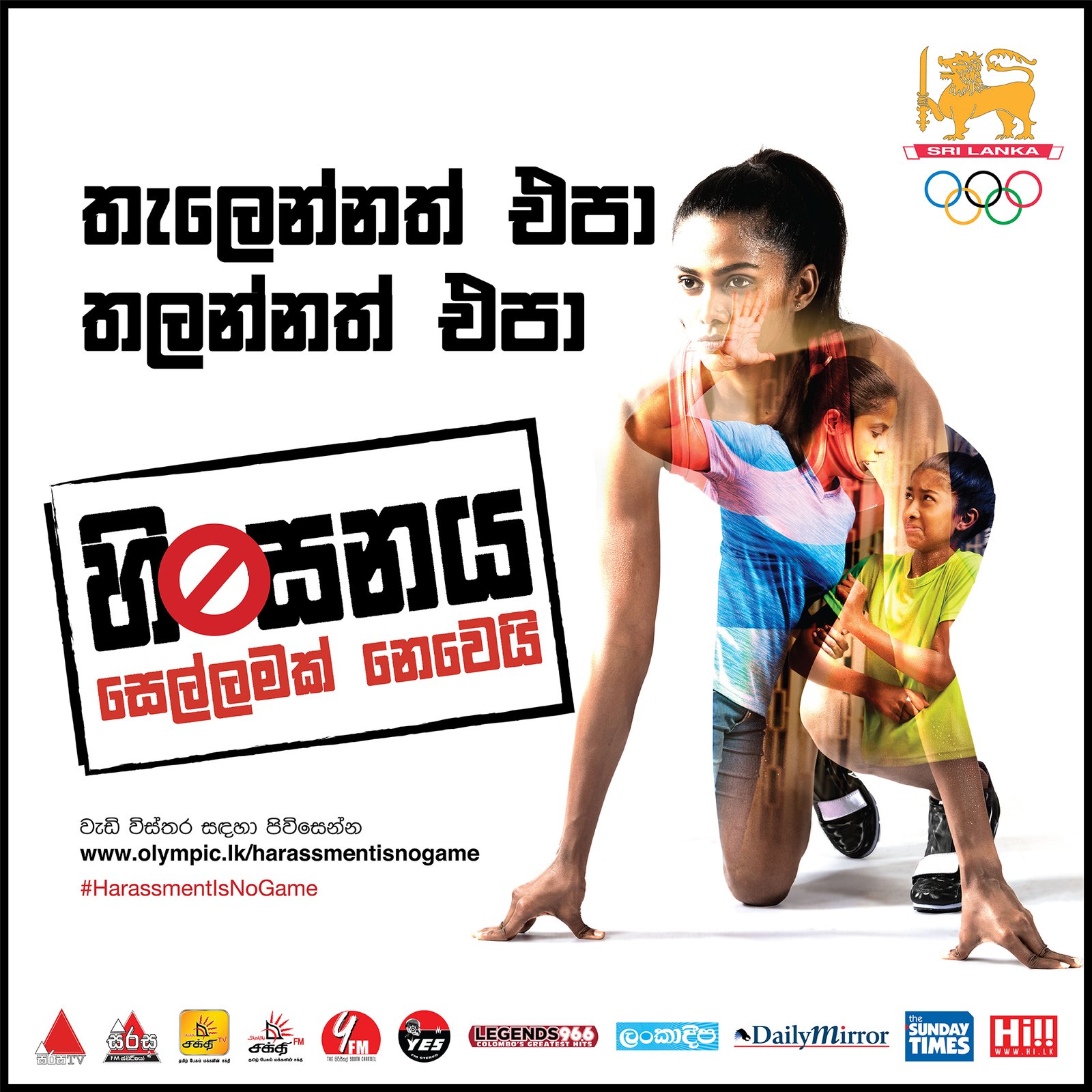
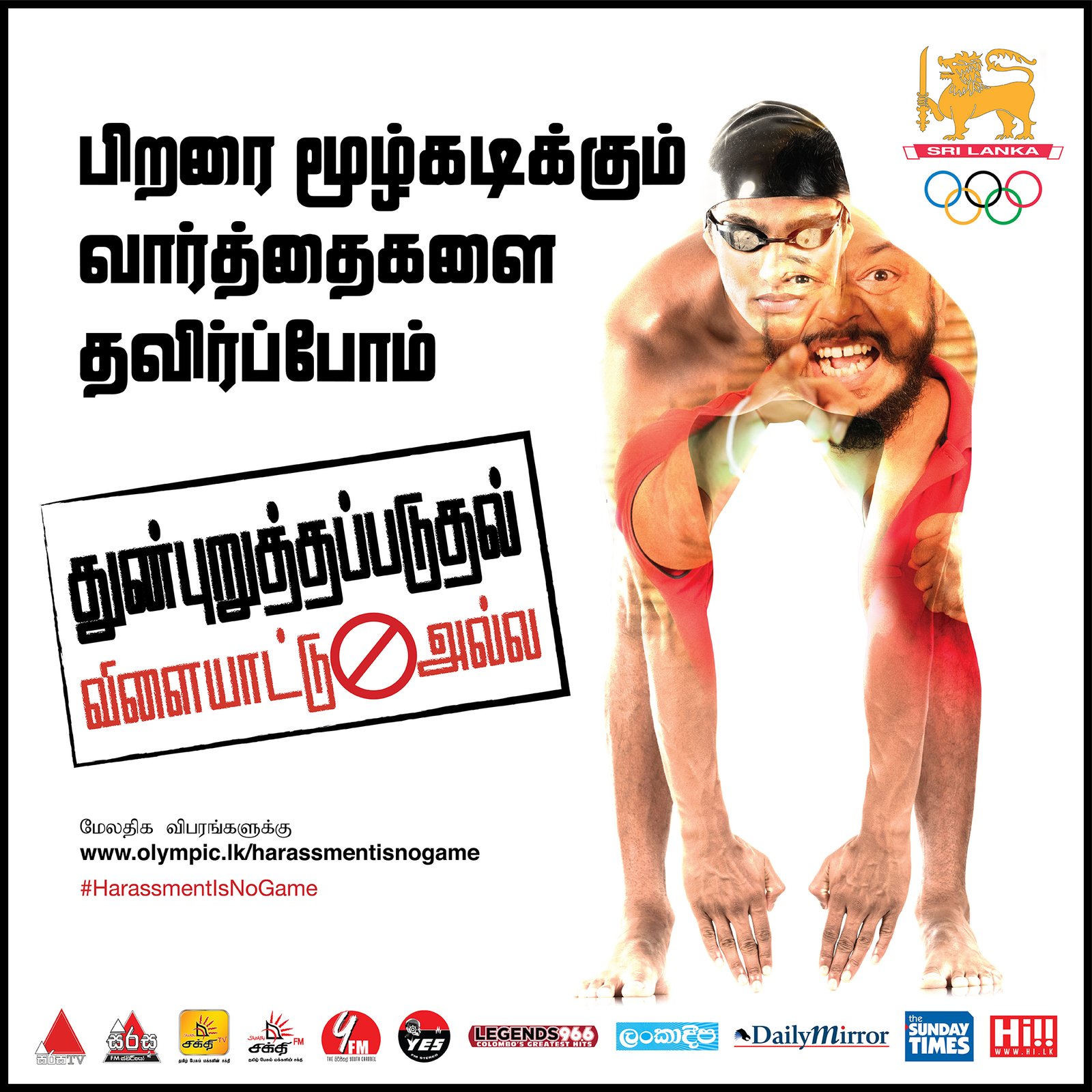
The NOCSL has also run several awareness campaigns, including one during the COVID pandemic under the tagline “Harassment is No Game.” “We haven’t had funds lately to continue large-scale campaigns, but the system is still fully in place,” Niloo says. “We’ve also done awareness sessions with National Federations so that they, in turn, can educate their athletes and officials”
Minors, she notes, are also protected under the policy, with trained personnel in the complaints and hearing committees. “We even provide recommendations for therapy when necessary. There’s a lot of hand-holding—many people don’t know that.”
Asked if victims can come forward without fear of retaliation, she’s firm: “Yes. Confidentiality is key. The person doesn’t have to approach their federation, which could be biased. Our independent system protects the athlete. That’s how we built it.”
The process includes three escalation levels: Complaints Committee, Hearing Committee, and finally the Executive Committee. Sanctions, including suspensions and bans, can be recommended at any stage. “And we also address false allegations,” Niloo clarifies. “The goal is fairness and athlete safety.”
She believes that policies like this must be proactive, not reactive. “Abuse is not going to magically disappear. But we can educate people, raise awareness, and empower victims to act early—even if it's just a message. If you ignore the first sign, it gets worse.”
The Safe Sports framework is aligned with IOC guidance and global standards. “Even developed countries have the same issues,” Niloo says. “We’re all dealing with human behaviour. So I don’t think Sri Lanka is behind—we were ahead in drafting and approving a national policy.”
Niloo hopes to integrate safe sports awareness through the help of the Ministry of Sports and the school education system. “We’ve done so much already, but there’s still more to do. Education is the key—both to prevent abuse and to support victims.”
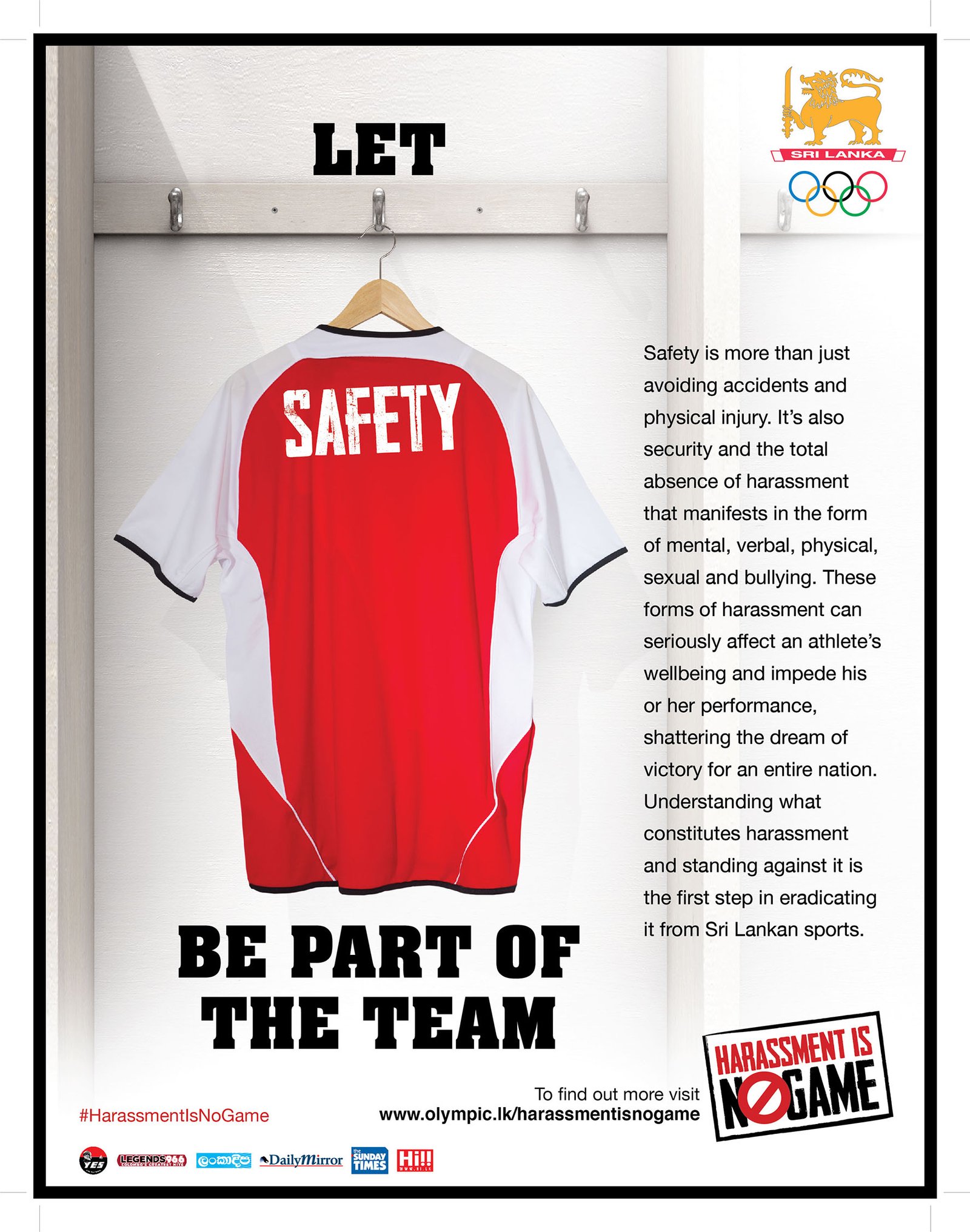 “Safe Sport is about safeguarding not just bodies, but dreams. Young athletes come into sport to find purpose, identity, and pride—not trauma,” Niloo explains. “That’s why our mechanism is athlete-centered. The policy doesn’t end with a complaint form—it includes education, sensitisation, and accountability.”
Niloo, who has been a longstanding advocate for gender equity in sports governance, stresses the importance of proactive engagement: “The days of brushing these issues under the rug are over. We want to empower athletes—especially young girls and boys—to understand that consent, respect, and personal safety are non-negotiable.”
But Niloo acknowledges there’s still work to be done: “There’s a deep fear among victims. Often, their first thought is, ‘Who will believe me?’ We want to shift that narrative to, ‘We are here. We believe you. And there are steps you can take.’”
She urges anyone who feels unsafe, intimidated, or violated in a sporting context to come forward, even if years have passed. “No one should feel that time has stolen their right to justice or healing.”
The NOC SL’s Safe Sport policy and complaint mechanism are accessible via their website, and the Gender Equity Committee maintains open channels of communication to assist and support individuals navigating the process.
“This is not a witch-hunt. It’s a mission to protect and restore trust,” Niloo said. “Because if we lose the trust of our athletes, we lose the soul of sport.”
To young athletes and others suffering in silence, Niloo has a heartfelt message: “You don’t have to suffer alone. When you speak up, you make change possible. Our goal is to create a safe space for you—not just to play—but to thrive. No one should feel ashamed. Education, awareness, and empathy are how we build a stronger, safer sports culture.”


